Canadian Agricultural Safety Week (CASW) takes place each year during the third week of March, raising awareness about safety across the agricultural sector. Farming is a vital part of our community, and the Ontario Provincial Police (OPP) acknowledges the distinct hazards that come with this line of work. Through awareness, preparation, and cooperation, we can help keep our farming operations both safe and productive.
Many farm-related injuries can be avoided. Whether handling livestock or operating heavy equipment, taking preventative measures goes a long way in reducing risk. This includes ensuring all workers receive proper safety training, regularly inspecting and maintaining equipment, and keeping clear lines of communication—especially when working alone—so others are aware of your location and tasks. Installing Roll-Over Protective Structures (ROPS) on tractors and machinery can also help prevent serious injury in the event of a rollover. Just as importantly, taking regular breaks is essential, as fatigue can slow reaction time and increase the likelihood of accidents.
Farms often function as both homes and workplaces, which can present added risks for children and families. Creating designated safe play areas and ensuring children are always supervised are important steps in preventing injuries in these shared spaces.
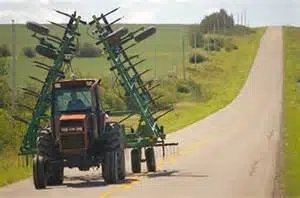
Road safety is another key consideration in rural areas. Farmers operating equipment on public roads should make sure their machinery is clearly visible with proper lighting and signage. At the same time, motorists need to remain alert and expect slow-moving farm vehicles. Passing should be avoided in unsafe areas such as hills, curves, intersections, bridges, and along double lines. Giving farm equipment plenty of space is essential, and extra caution should always be taken around horse-drawn vehicles, as sudden movements or loud noises can startle animals.
Mental health is also an important part of overall well-being in the farming community. The demands of farming can be intense, with long hours and ongoing pressures. Support is available, and reaching out can make a difference. The Suicide Crisis Helpline is available 24/7 by calling or texting 9-8-8.
By staying informed, looking out for one another, and prioritizing safety, we can help ensure everyone on and around our farms gets home safely.
Written by: C. Soares